


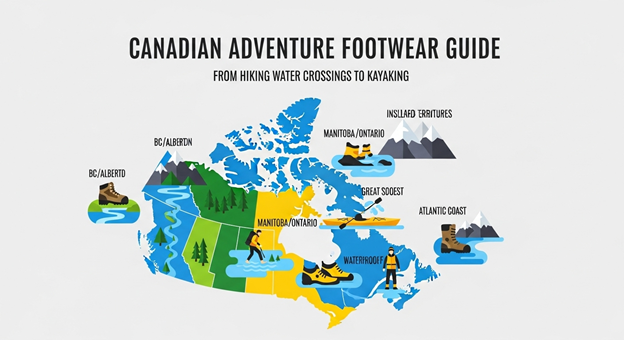
Canada’s wilderness demands footwear that adapts to rapidly changing conditions—from slippery river crossings to rocky kayak launches and icy glacial streams. Choosing the wrong shoes risks injury, hypothermia, or failed expeditions. This guide cuts through the noise with practical advice tested in Canada’s toughest terrains.
Why Canadian Adventures Need Specialized Footwear
- Hypothermia risk: Cold water (5–15°C) can drop foot temperature by 15°F in 30 seconds. Wet shoes amplify heat loss 25x faster than air .
- Terrain hazards: Glacial silt hides unstable rocks, barnacles slash thin soles, and algae reduces grip by 60–80% .
- Activity shifts: Hiking-to-kayaking transitions demand drainage, ankle support, and board grip .
Footwear for Hiking Water Crossings
Key Features
- Drainage ports: Prevent waterlogging (e.g., Astral Loyak’s heel/toe vents empty in <10 sec) .
- Siped rubber soles: Vibram Megagrip or G. Rubber™ flex to create suction on slick rocks .
- Ankle security: Snug collars prevent shoe loss in currents .
- Lightweight materials: Trail runners dry faster than boots and reduce blister risk .
Footwear for Kayaking & Canoeing
Key Features:
- Insulation: 3–5mm neoprene for cold lakes/rivers.
- Durability: Welded seams withstand abrasive boat decks.
- Drainage: Directional ports eject water without debris intake.
- Grip: Flat soles enhance board sensitivity for SUP balance.
The Best Travel Shoes for Canadian Adventures
For those who need one pair that does it all—from city streets to backcountry trails and casual paddling—a versatile hybrid is essential.
Hosers Wayfinder
Best Do-It-All Travel Shoe for Canada:
- Versatility: Performs equally well on urban pavement, forest trails, and rocky shorelines. A true multi-activity travel shoe.
- Drainage: Quick-dry mesh and strategic ports handle unexpected water crossings or rain.
- Comfort: Cushioned insole and lightweight design are ideal for all-day exploration and long travel days.
- Style: Low-profile, casual design transitions seamlessly from a day hike to a restaurant.
- Best For: Travelers and adventurers who demand one shoe for everything Canada throws at them.
- Learn more: Hosers Travel Shoes
Transition Footwear: From Trail to Boat
Hybrid shoes bridge land-water gaps without compromising safety:
- Palm Gradient 3.0 Boots: Vibram soles + neoprene cuffs handle rocky portages and kayak footpegs.
- Teva Omnium Closed-Toe Sandals: Drain slots + secure straps suit tidal zone hikes (West Coast Trail) .
- Hosers Wayfinder: The ultimate travel shoe for explorers who need a single, reliable pair for diverse Canadian terrain.
Footwear Comparison by Activity
| Activity | Best Footwear | Key Features | Ideal For |
| River Crossings | Astral Loyak AC | Siped soles, drainage ports | BC’s slick granite |
| Kayaking | NRS Paddle Wetshoe | 3mm neoprene, welded seams | ≤10°C glacial rivers |
| Portaging | Astral Hiyak | Quick-dry, ankle support | Nahanni River mudflats |
| Travel & Hiking | Hosers.co | Versatile, comfortable, quick-drying | City to trail transitions |
Safety & Survival Tips
1. Assess Currents First:
- Throw a stick upstream. If it flows faster than a brisk walk, do not cross .
- Avoid water deeper than mid-thigh in rapids .
2. Group Crossing Techniques:
- Triangle method: 3 people lock arms, strongest upstream breaking current .
- Solo hikers: Wait for others—never risk fast flows alone .
3. Hypothermia Prevention:
- Wool socks retain insulation when wet. Pack 1 pair per 2 days .
FAQs: Adventure Footwear in Canada
Q: Can I wear hiking boots for water crossings?
A: Only if waterproof. Standard boots trap water, causing blisters. Trail runners or hybrid travel shoes drain better .
Q: How do I dry shoes overnight in the backcountry?
A: Remove insoles, stuff with newspaper or dry moss, and hang near fire (if permitted). Neoprene takes 12+ hours—bring extras .
Q: Are sandals safe for kayaking?
A: Yes, if secure (Bedrock Cairn Pro). Avoid flip-flops—straps tear in currents .
Q: When to replace water shoes?
A: When tread wear exposes >400mm² of smooth rubber. Worn soles reduce grip by 38% .
The Bottom Line
Pack shoes that match your riskiest moment—whether facing a Class III rapid or a glacial creek—and prioritize safety over convenience. Your feet carry you home; don’t compromise.
Next Step: Find the perfect travel shoes for your adventure. Explore the Hosers.co for your next Canadian trip.


